

Leadership During a Turbulent Time in Our History
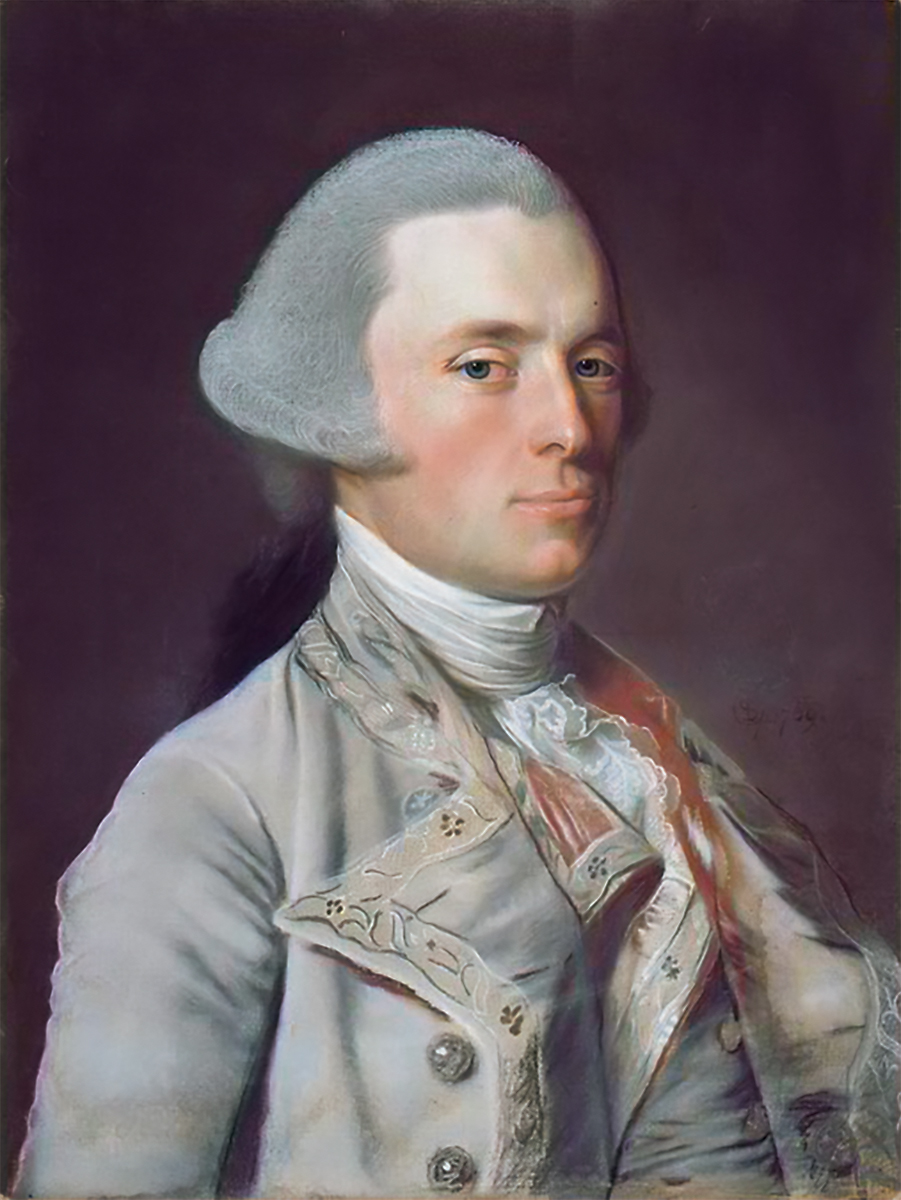
Colonel John Wentworth was a highly respected leader in colonial New Hampshire even before the outbreak of the American Revolution. Although he and New Hampshire’s royal governor (also named John Wentworth) were cousins, he was active in the struggle against British encroachments on American liberties and deserves greater recognition for his leadership during a turbulent time in our history.
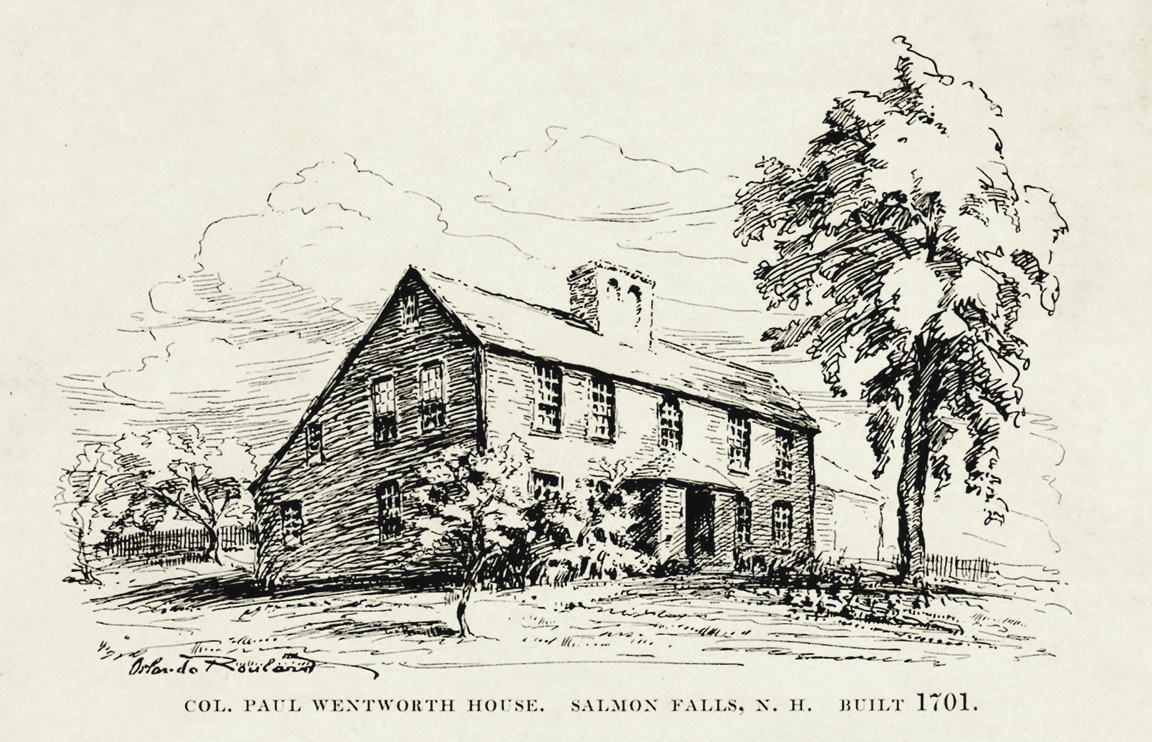
Born in Dover’s parish of Somersworth (now Rollinsford) in 1719, John Wentworth was the son of Colonel Paul Wentworth’s brother Benjamin who died when John was a small child. Having no children of his own, Paul treated John like an adopted son, and when Paul died in 1748, John inherited Paul’s homestead farm and other property. At this point in his life, John was already involved in colonial government. He had been chosen as a selectman for Dover in 1747, and from 1749 on was a representative to New Hampshire’s Provincial Assembly (first for Dover and after 1755 for Somersworth), and frequently moderated Somersworth’s town meetings.
In the years following the French and Indian War (1754-1763), Britain’s Parliament sought to impose greater control over the American colonies and attempted to force the colonies to pay a share of the cost of maintaining Britain’s overseas empire through a series of taxation acts. Because the colonists had no representation in Parliament, they viewed these acts as a violation of their rights as Englishmen, and the acts were strongly opposed. The situation took a bloody turn in March 1770, when British soldiers fired into a hostile mob in Boston, killing five colonists. Against this backdrop of rising tension, Colonel John Wentworth was chosen to be speaker of the Provincial Assembly in 1771.
In May 1773 Parliament passed the Tea Act granting the financially troubled British East India Company a monopoly on the American tea trade. The act lowered the price that colonists paid for their tea but included a 3 pence per pound tax, which colonists suspected was a ploy to get them to acknowledge Parliament’s right to tax them. The Tea Act sparked boycotts and protests throughout the colonies and on December 16, 1773, Boston’s Sons of Liberty dumped 342 chests of British tea into Boston Harbor. As punishment for the Boston Tea Party, Britain closed Boston Harbor, dissolved the Massachusetts assembly and instituted martial law in Massachusetts, which only served to further unite the colonies against British rule.
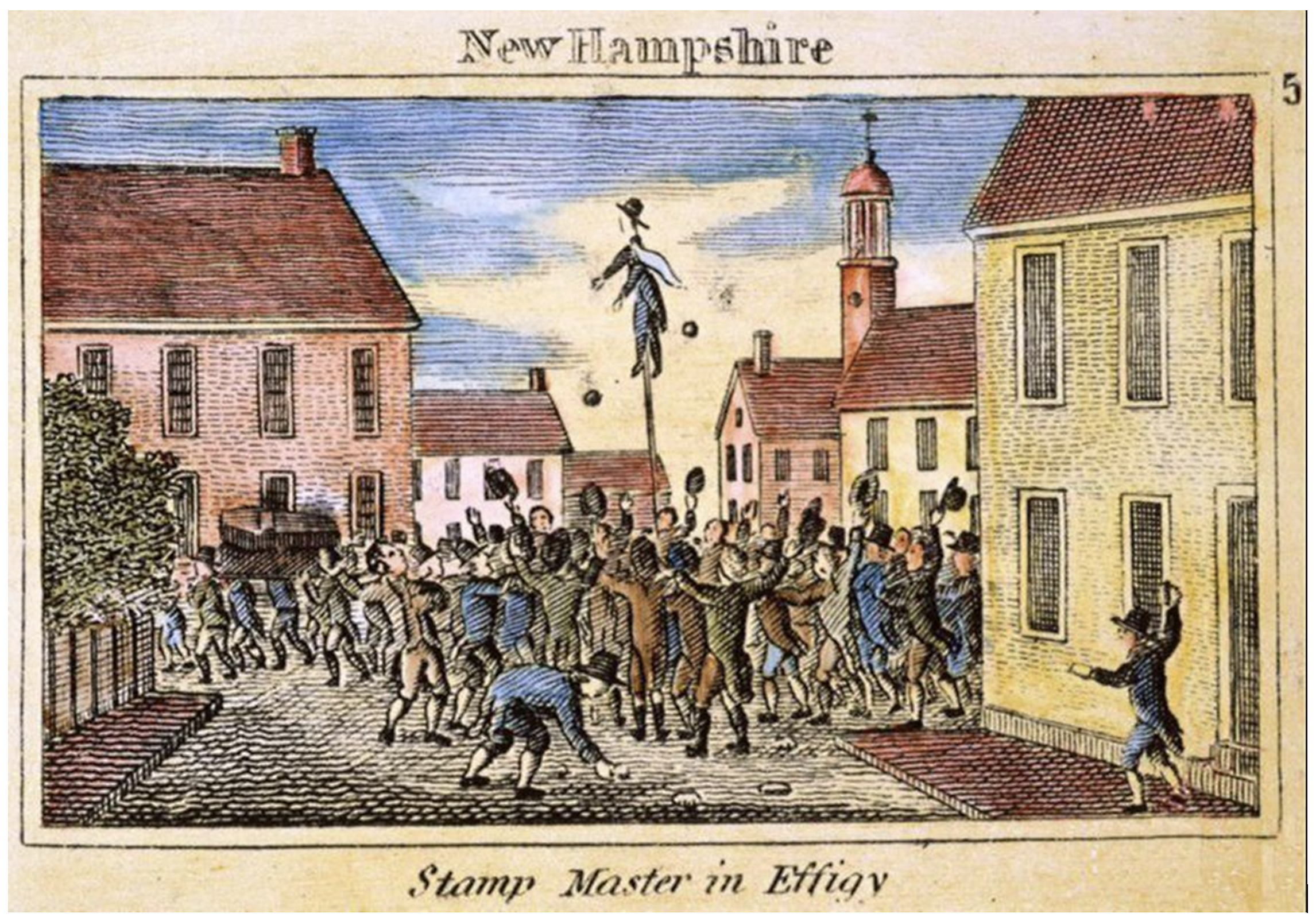
Many colonies established Committees of Correspondence to exchange news and coordinate action, and New Hampshire was no exception: the Provincial Assembly appointed Colonel Wentworth and six other men to “be a committee of this House to correspond, as occasion may require, with the committees that are or may be appointed in our sister colonies.” Further, they directed that Colonel Wentworth as Speaker should “answer such letters, from time to time, as he may receive from any of the Houses of our sister Colonies . . . .& assure them that, this House is ready to join in all salutary measures that may be adopted by them at this Important crisis, for saving the Rights and Privileges of the Americans & Promoting Harmony with the Parent State.”
Angered by the Assembly’s action, Governor John Wentworth attempted to dissolve the Assembly but his order was ignored. Colonel Wentworth was in the Speaker’s chair on June 8, 1774 when Governor Wentworth entered the chamber accompanied by the sheriff, declared the meeting illegal, and directed the sheriff to order them to disperse. The members complied but simply reconvened in another building. Only days later, Colonel Wentworth wrote to the Massachusetts Committee of Correspondence about the dissolution of New Hampshire’s Assembly and the actions taken by Parliament to punish Massachusetts:
The sons of freedom in New Hampshire, I believe, sympathize with your metropolis in its present distress. So mighty a display of ministerial vengeance can be accounted for only from your noble efforts to stem the torrent of oppression. Any notices on the present critical situation of America which you shall please to favor me with . . . shall be acknowledged and faithfully communicated by,
Gentlemen, your Friend and Countryman
JOHN WENTWORTH
In the meantime, members of the dismissed Assembly gathered in Exeter to discuss next steps, and Colonel Wentworth wrote to New Hampshire’s towns requesting that they send representatives to a meeting in Exeter for the purpose of choosing delegates to attend the Continental Congress in Philadelphia. When this Provincial Congress met in July 1774, Colonel Wentworth was chosen as chairman and so signed the credentials for Major John Sullivan and Nathaniel Folsom as New Hampshire’s delegates to the first Continental Congress.
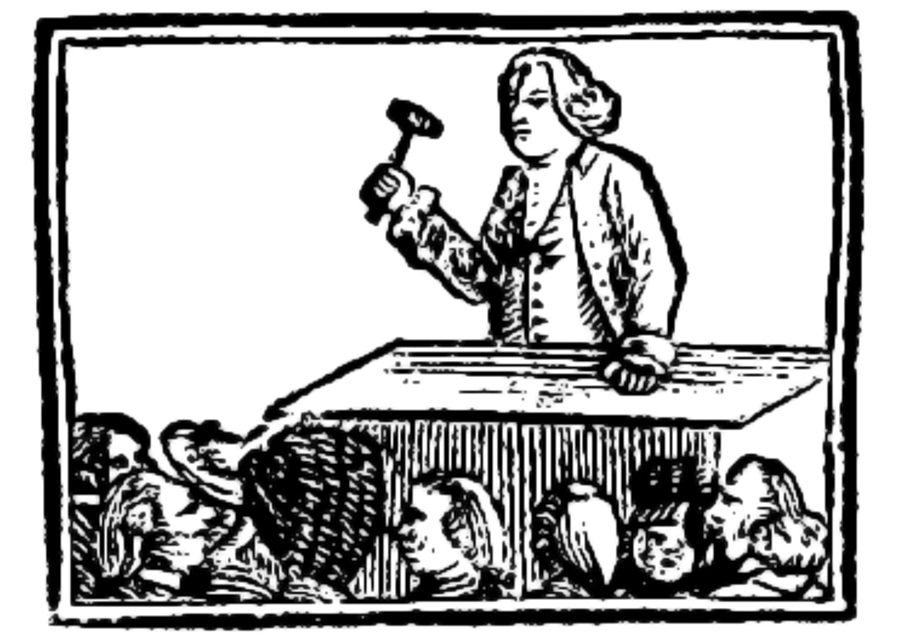 The situation in New Hampshire worsened throughout the fall and winter of 1774. Governor Wentworth secretly sent workmen from New Hampshire to Boston to build barracks for British soldiers, and also permitted shipments of tea to be landed at Portsmouth. In December, upon being warned that the British were on their way to seize munitions stored at Fort William and Mary in New Castle, patriots led by Major John Sullivan and Captain John Langdon raided the Fort and seized gunpowder, small arms, and fifteen light cannon.
In January 1775, 144 representatives of New Hampshire towns met in Exeter, with Colonel Wentworth again presiding. This Provincial Congress elected Major John Sullivan and Captain John Langdon to represent New Hampshire at the second Continental Congress, and anticipating a worsening of relations with British authorities, authorized Colonel Wentworth and six others to call another Provincial Congress if events required it. Concerned with maintaining order in the province, the body wrote an address to the people of New Hampshire, which was signed by Colonel Wentworth and published in the New Hampshire Gazette on February 3, 1775:
When we consider the unhappy condition to which you and your American brethren are reduced; when we reflect that for near ten months past you have been deprived of any share in your own government . . . when we view the lowering clouds, charged with ministerial vengeance, fast spreading over this extensive continent . . . tyranny already begins to wear its banner on your borders, and to threaten these once happy regions with infamous and detestable slavery. . . Should our restless enemies . . . be successful, they will thereby rivet the chains of slavery on us and our posterity. . . . we earnestly entreat you at this time of tribulation and distress, when your enemies are urging you to despair, when every scene around you is full of gloom and horror, that . . . you implore the Divine Being . . . to espouse your righteous cause . . . and . . . restore to you and your American brethren that peace and tranquility so ardently sought for by every true friend to liberty and mankind.
But peace and tranquility were not to be. Less than three months later, on April 19, 1775, British troops and Massachusetts militia men clashed at Lexington and Concord, setting off the American Revolution. In response to the emergency, Colonel Wentworth and the Committee of Correspondence quickly called a fourth Provincial Congress. After a brief meeting, the group adjourned until April 25 to allow representatives from more distant towns to arrive but Colonel Wentworth was too ill to attend, and Meshech Weare was chosen to preside in his stead.
While troops from New Hampshire hurried to join other militiamen surrounding Boston, rebel militias began occupying and fortifying Portsmouth, and threats were made against anyone who spoke in favor of the governor or Britain. It had been a year since the Provincial Assembly had met and Governor Wentworth chose this time to call the Assembly back into session in Portsmouth. But he made an already tense situation worse by attempting to add three of his supporters to the Assembly and, with Colonel Wentworth again presiding as Speaker, the Assembly refused to seat them.
One of them was Colonel Fenton, an outspoken Loyalist, and he objected vociferously to his exclusion. Later that evening, while Colonel Fenton was having dinner at the Governor’s house, an armed mob surrounded the house and demanded his surrender. At first he refused, but when the mob pointed a cannon at the door, he surrendered and was marched off to confinement in Exeter.
Fearing for their safety, Governor Wentworth and his family escaped out the back door before the mob returned and ransacked the house. The Wentworths fled first to Fort William and Mary, and later to the Isles of Shoals, from whence the governor sent a message dismissing the Assembly. Governor Wentworth never returned to New Hampshire, and the Assembly never met again.
New Hampshire was now left without a legitimate governing authority, so the Provincial Congress met in Exeter in December to create a new government for the province. Working quickly, they proclaimed a new constitution for New Hampshire on January 5, 1776, the first of the thirteen colonies to do so. Predating the Declaration of Independence by six months, this new constitution declared New Hampshire’s independence from British rule. It also created a two-house legislature consisting of a House of Representatives and a 12 member upper Council. Colonel Wentworth was elected to the Council, serving in that capacity throughout the war, and was also appointed one of the judges of the Superior Court. Sadly, Colonel Wentworth did not live to see America’s final victory over the British at Yorktown. He died on May 17, 1781, and was buried in the family plot near the Wentworth House.
“His father’s blood runs through all his veins.”
Colonel Wentworth’s oldest son John Wentworth, Jr. (1746-1787) was equally dedicated to the cause of American liberty. He was a member of both Dover’s Committee of Correspondence and New Hampshire’s Committee of Safety, and served in New Hampshire’s House of Representatives from 1776 to 1781. A delegate to the Continental Congress in 1778, John Jr. signed the Articles of Confederation which established a framework for the unification and governance of the thirteen states during and after the Revolution. In 1781 he succeeded to his late father’s position on the Council, and from 1784 to 1786, he represented Dover in the New Hampshire state senate. John Wentworth, Jr. died from consumption on January 10, 1787. It is an indicator of the high esteem in which both father and son were held that Governor John Langdon, in paying tribute to John Jr., said “His father’s blood runs through all his veins.”
